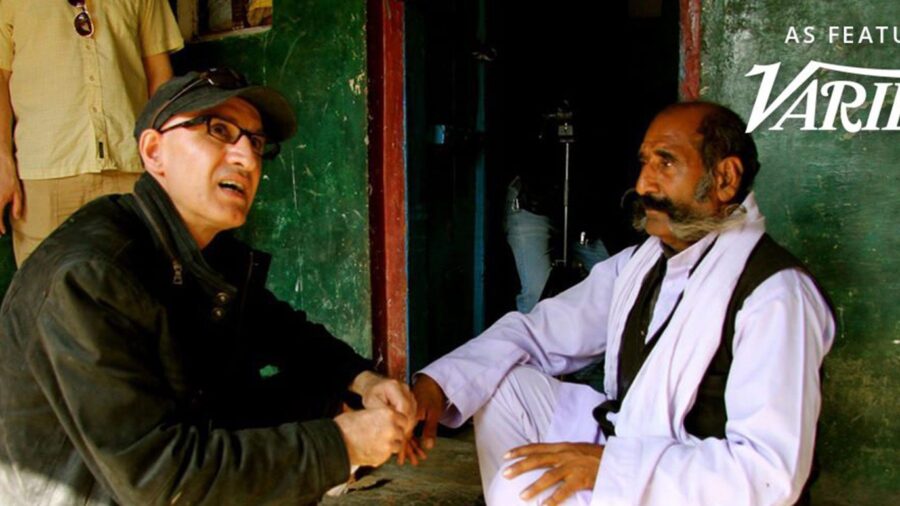
A few days ago, Variety India published an extensive interview with me about PHOOLAN.
The interview was conducted by Purba Dutt, a journalist whose questions were thoughtful, challenging and, at times, uncomfortable. I liked that. I have little interest in conversations where the questions are designed to make the interviewee look good.
Reading our exchange again, I was reminded of something fundamental about this film.
We are not making a safe film!
Phoolan Devi has been called many things. A bandit. A murderer. A victim. A revolutionary. A feminist icon. A criminal. A hero.
Everyone seems to want a piece of her. Everyone wants to explain her.
But how many are willing to listen to her?
I first encountered Phoolan’s story years ago, and what drew me to her was not the mythology surrounding the Bandit Queen. It was a woman born into poverty, denied education, subjected to terrible violence and humiliation, who refused to accept the place assigned to her.
She had no money, no powerful friends, no institution to protect her. Yet she fought forces vastly more powerful than herself.
I know something about that kind of confrontation. My own life as an exile has been anything but easy.
Respectability is often a luxury afforded to people who have never been forced to fight for their existence.
But neither am I interested in justifying everything she did.
Some of her actions were violent. Some were deeply troubling. People suffered.
These are not inconvenient details to be edited out in service of an uplifting narrative.
They are part of the story.
And this is where things become difficult.
Can we condemn an act of violence while still understanding the circumstances that produced it? Can we recognize someone’s humanity without excusing their actions?
I believe we must.
Otherwise, what are we doing as filmmakers? Merely confirming what our audiences already believe?
Over the years, we have traveled across India, meeting Phoolan’s family, former gang members, people who witnessed crucial events, and people who suffered because of her actions. We have heard stories that contradict one another. Memories shaped by love, hatred, fear, loyalty and the passage of time.
We have also been entrusted with something extraordinarily rare: recordings of Phoolan speaking about her life, private, previously unseen photographs, and handwritten accounts preserving her own recollections.
I cannot overstate the importance of this material.
For decades, Phoolan has been interpreted, celebrated, condemned and reinvented by others. Now we have an opportunity to hear her own voice.
Not because her account should be accepted without question. It shouldn’t. But because a woman who spent much of her life being denied the right to speak deserves to be heard.
Above all, I want audiences to leave the cinema feeling empowered. If that Indian village girl, with almost everything stacked against her, could rise above her circumstances and demand to be counted, perhaps I can rise above mine
too.
That, to me, is the most precious message of this film.
Our documentary is now 75% complete, creatively and financially. We still need partners to help us finish it. The journey has been long, sometimes exhausting, but the film has never felt more necessary.
The renewed interest in Phoolan Devi is welcome. But attention alone is not understanding.
I am grateful to Purba for giving me the space to explore these questions, and for reminding me that a good interview, like a good film, should challenge both the person asking the questions and the person answering them.
You can read our full conversation in Variety India.
There is a reason we have devoted so many years to this film.
We are not interested in another legend.
We want to understand the woman.
Hossein Martin Fazeli
Writer, Director and Producer
PHOOLAN