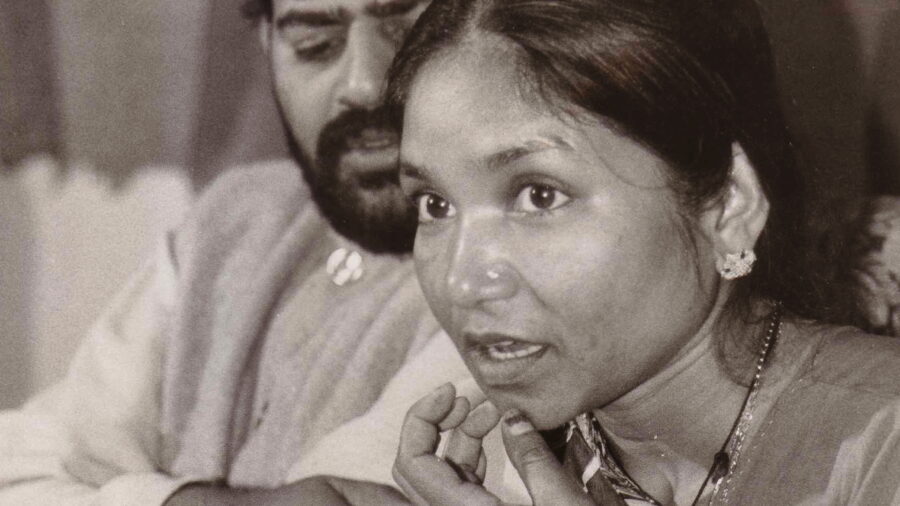
Phoolan Devi was illiterate. She had spent eleven years in prison. She was a low-caste woman from a village with no political connections, no money, and no place in the corridors of power. By every conventional measure, she had no business running for Parliament.
She won in a landslide.
Her 1994 election to India’s Lok Sabha was not just a personal triumph. It was a rupture in a political system that had spent decades signaling — through its structures, its candidates, its silences — that women like her did not belong. She proved it wrong. And the numbers show how much further the system still has to go.
Women and Power: Where India Stands
In the 18th Lok Sabha elected in 2024, only 74 women were elected — representing about 13.6% of the 543 seats in the Lower House. This was a drop from 78 women (around 14.7%) elected in 2019.
Despite forming roughly half the population, women remain vastly underrepresented at the highest levels of decision-making. India ranks among the lowest in the world for women’s representation in national parliaments, trailing many countries that outperform it by wide margins on gender parity.
At the grassroots level, progress has been stronger. Thanks to mandated local-government quotas, women now occupy around 44–45% of seats in rural Panchayati Raj institutions — showing what gender parity can look like when structural barriers are reduced.
The Women’s Reservation Bill
The Women’s Reservation Bill, passed in 2023, would reserve one-third of seats in Parliament and state assemblies for women. But it has yet to be implemented — with full rollout dependent on future constituency redistricting that may not occur until 2029 or later.
A law passed. A promise deferred. For the women waiting on the other side of that promise, the gap between legislation and reality is not abstract — it is the difference between having a voice in the decisions that govern their lives and being governed without one.
Why Representation Matters
Without meaningful political power at the national level, it is difficult to enact laws that protect women or build equitable structures of governance. Women’s issues are routinely sidelined in legislative priorities — not because they are unimportant, but because the people most affected by them are the least represented in the rooms where priorities are set.
Phoolan Devi understood this. As a member of Parliament, she used her platform to speak about caste violence, failures of the justice system, and the lived experience of people her colleagues had never met. She was assassinated outside her home in 2001. The murder remains unsolved.
She walked through a door that should never have been as hard to open as it was. It is still not open wide enough.
Support the Film | Explore Other Issues | Learn Her Full Story