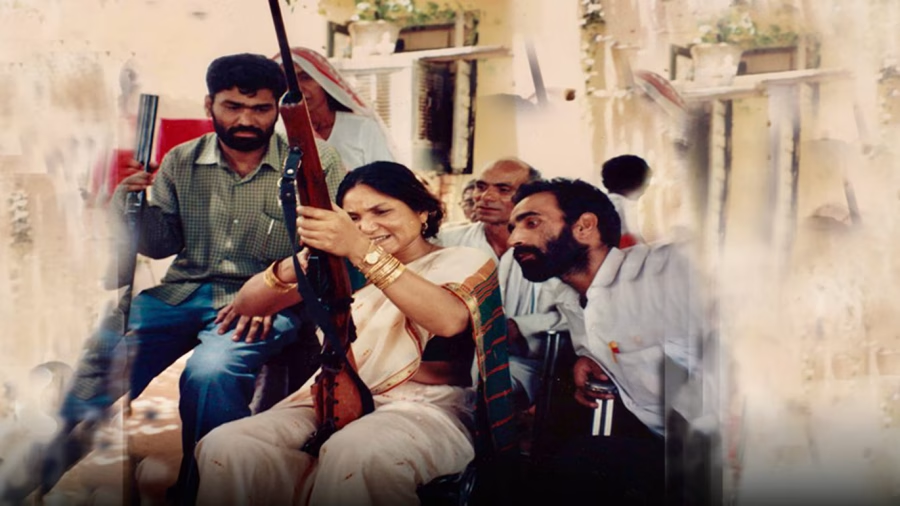
When Phoolan Devi was held captive in Behmai and gang-raped for ten days by upper-caste men, the system around her did what it almost always does: nothing. Her rapists had caste, standing, and the presumption of impunity on their side. She had none of those things.
She responded not with silence — but with a gang, a gun, and a reckoning that shocked a nation. Her story begins where the justice system ends. And for millions of women in India, the justice system still ends in the same place.
The Alarming State of Affairs
The numbers are staggering — and they are still only fragments of the truth.
India’s National Crime Records Bureau reports that registered rape cases have risen nearly 900% over the past 40 years. In 2025 alone, 24,923 rape cases were officially recorded.
But those are only the cases that made it onto paper. Because of stigma, fear, police indifference, and social retaliation, vast numbers of assaults are never reported. Some activists estimate that only 10% of rapes are reported. Others believe the number may be as low as 1%.
The reality is darker than the statistics allow.
The Nirbhaya Case and the Push for Reform
On December 16, 2012, the brutal gang rape of Nirbhaya, a 23-year-old student in New Delhi, ignited national outrage. Her assault forced India — and the world — to confront a crisis long ignored. Thousands flooded the streets demanding justice. The protests shook the political establishment.
The result was reform to India’s penal code. Stalking, voyeurism, and sexual harassment were criminalized. Stronger penalties were introduced, including the death penalty in certain cases. Police refusal to register rape complaints was made a crime.
But laws on paper do not automatically transform reality. Justice is not declared. It is enforced. It is protected. It is lived. The question remains: has the culture changed? Have systems changed? Are women safer?
Caste and Sexual Violence
For lower-caste women in India, sexual violence carries an additional layer of systemic failure. Crimes against Dalit and lower-caste women are disproportionately underreported and under prosecuted. When perpetrators belong to dominant castes, the barriers to justice — social pressure, police indifference, community silence — multiply.
Phoolan Devi’s rape was not simply a crime. It was a caste atrocity, committed with the expectation of impunity. Her response — forming her own gang and returning to Behmai — was extraordinary precisely because it shattered that expectation. Most women in her position never get the chance.
Silence Protects Abuse. Action Disrupts It.
Below are organizations working on the front lines to confront sexual violence in India. If this issue moves you, consider supporting their work.
Stree Mukti Sanghatana — Women’s Liberation Organization
https://streemuktisanghatana.org
India’s Anti-Rape Movement: Redefining Solidarity Outside the Colonial Frame
https://www.opendemocracy.net/5050/amrit-wilson/indias-anti-rape-movement-redefining-solidarity-outside-colonial-frame
All India Progressive Women’s Organisation (AIPWA)
https://aipwa-aipwa.blogspot.ca
Support the Film | Explore Other Issues | Learn Her Full Story